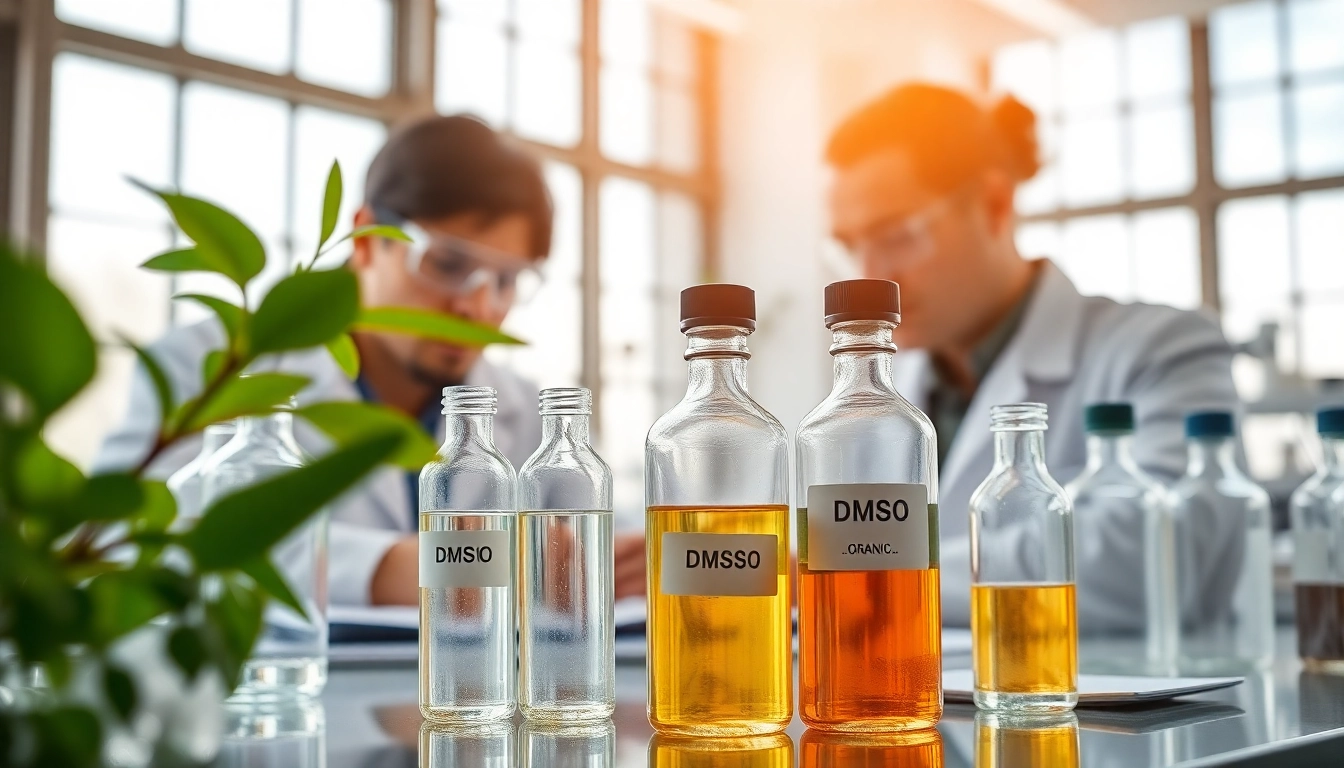
What is DMSO Organic?
Definition and Composition
Dimethyl Sulfoxide (DMSO) is a colorless, odorless liquid that is widely recognized as a potent solvent and pharmaceutical agent. Within the realm of organic chemistry, DMSO is classified as a polar aprotic solvent, meaning it has the ability to dissolve both polar and non-polar substances. Its unique molecular structure, comprising a sulfur atom bonded to two methyl groups, imbues DMSO with characteristic properties that make it an invaluable tool in various fields spanning medicine, pharmaceuticals, and industrial applications. When we refer to dmso organic, we recognize DMSO that is derived from natural sources without synthetic interventions, ensuring a product that maintains integrity and effectiveness.
Origin and Extraction Process
The journey of DMSO from raw material to the final product begins with its extraction from lignin, a byproduct of wood processing. This substance not only serves as a structural component in plant cells but also as a solvent in various chemical reactions. The extraction process typically involves the use of water or steam in a high-pressure environment, enabling the isolation of DMSO while preserving its organic properties. This method fosters an environmentally friendly approach, as it generates fewer contaminants compared to synthetic methods. The end product is a highly purified DMSO that contains minimal impurities, making it suitable for consumption and various applications.
Quality Standards in DMSO Organic
Quality assurance is pivotal in the production of DMSO. To ensure a product that meets user expectations, various standards have been established, such as those set by the United States Pharmacopoeia (USP) and the European Pharmacopeia (EP). DMSO labeled as organic must adhere to stringent guidelines concerning purity levels, contamination, and traceability. This includes rigorous testing for heavy metals, residual solvents, and microbiological contaminants. Consumers must opt for DMSO products that meet these quality criteria to guarantee safety and efficacy. Additionally, reputable manufacturers will often provide a Certificate of Analysis that attests to the product’s adherence to these standards.
Benefits of DMSO Organic
Potential Health Benefits
One of the primary reasons individuals and healthcare practitioners are drawn to DMSO is its purported health benefits. Its anti-inflammatory and analgesic properties have made it a subject of interest for both clinical and alternative medicine. Research indicates that DMSO can aid in reducing pain related to conditions like arthritis and sports injuries. Moreover, its ability to enhance the absorption of other compounds through the skin makes it an appealing option in topical formulations. It is believed to reduce swelling and inflammation, providing relief from various ailments.
Applications in Medicine
DMSO has gained traction in medicine, particularly in conditions where traditional treatments may fall short. For instance, it is sometimes recommended for conditions such as interstitial cystitis and systemic sclerosis. Additionally, its use as a cryoprotectant in cell preservation showcases its versatility in the field of regenerative medicine. DMSO's ability to protect cells during freezing processes helps maintain cellular viability, a key factor in various therapeutic applications.
Industrial Uses of DMSO Organic
Beyond its medicinal applications, DMSO is utilized in various industries. Its solvent properties make it an excellent choice for chemical synthesis and extraction processes. In the construction industry, DMSO is used in the formulation of various polymers and resins, enhancing their performance. Furthermore, in the agricultural sector, it acts as a carrier for pesticides and herbicides, improving their effectiveness by helping them penetrate plant tissues more effectively. This multifunctionality highlights DMSO's value across different industrial applications.
How to Use DMSO Organic Safely
Dosage Guidelines
To ensure safe usage, it is crucial to follow dosage guidelines appropriate for the intended use. While there are no universally established dosage recommendations for all uses of DMSO, medical literature often suggests starting with a concentration of 70% for topical applications. Users should consult with healthcare providers to determine the most effective dosage based on individual health conditions and needs. It is advisable to conduct a patch test prior to extensive application to assess skin tolerance.
Best Practices for Application
When applying DMSO, considerations should be taken into account to maximize its effectiveness and minimize risks. The application should be limited to clean, intact skin, avoiding any cuts or bruises. Applying DMSO in a circular motion can enhance absorption and effectiveness. Furthermore, it is recommended to wash hands before and after application to avoid unintentional transfer of DMSO, which could lead to irritations or unwanted absorption of contaminants. It is also critical to avoid contact with certain substances that can react negatively with DMSO, such as alcohol.
Common Safety Precautions
As with any therapeutic agent, safety precautions are vital when using DMSO. Users should avoid ingesting DMSO unless recommended by a healthcare professional. Additionally, as DMSO can enhance the absorption of other substances, care must be taken to ensure that no harmful contaminants are present on the skin prior to application. Some individuals may experience side effects such as skin irritation or a garlic-like taste upon application, which should be monitored. Consulting a knowledgeable healthcare provider when first starting DMSO is advisable to mitigate risks and ensure safe usage.
DMSO Organic in Research and Development
Role in Pharmaceutical Research
DMSO is often utilized in pharmaceutical research due to its capacity to solubilize a wide range of compounds. Its role in drug formulation practices allows for the development of more effective drugs, particularly those with low water solubility. Moreover, DMSO serves as a valuable carrier for drugs, improving their delivery systems. Ongoing research aims to unlock further potential therapeutic applications, with studies focused on its interactions with various biological pathways and its efficacy in complex formulations.
Applications in Biotechnology
In biotechnology, DMSO plays a vital role in cryopreservation and cell culture. It is used as a cryoprotectant to safeguard cellular integrity during freezing and thawing processes. By preventing ice crystal formation inside cells, DMSO contributes significantly to various cellular and tissue preservation techniques. Additionally, its properties enable the formulation of efficient buffers and media in laboratory settings, facilitating various cellular and molecular biology experiments.
Innovations in DMSO Organic Uses
As scientific research continues to advance, innovative uses for DMSO are being explored. Recent studies have proposed its potential applications in treating neurodegenerative diseases, showcasing its ability to penetrate the blood-brain barrier. Additionally, researchers are investigating its role as an antioxidant and its potential for improving outcomes in various surgical procedures. The evolving landscape of DMSO research promises to uncover new frontiers and applications, making it a subject of significant interest in multiple domains.
Frequently Asked Questions About DMSO Organic
Can DMSO be organic?
Yes, DMSO can be organic when derived from natural sources without synthetic additives. It is typically extracted from lignin found in wood.
What happens if a human uses DMSO?
Using DMSO may cause skin irritation or a garlic-like taste. It can enhance the absorption of other compounds, so caution is advised.
Can you put DMSO directly on your skin?
Many use DMSO topically for its anti-inflammatory properties, but it's essential to ensure the skin is clean to avoid absorption of harmful impurities.
Is DMSO effective for inflammation?
DMSO is believed to reduce inflammation and alleviate pain. However, results may vary, so consulting with a healthcare provider is recommended.
How to store DMSO organic safely?
DMSO should be stored in a cool, dark place away from sunlight and in a tightly sealed container to maintain its integrity and prevent contamination.